#60: Eugenia Bone
The Mysteries of Unseen Life
Episode Summary
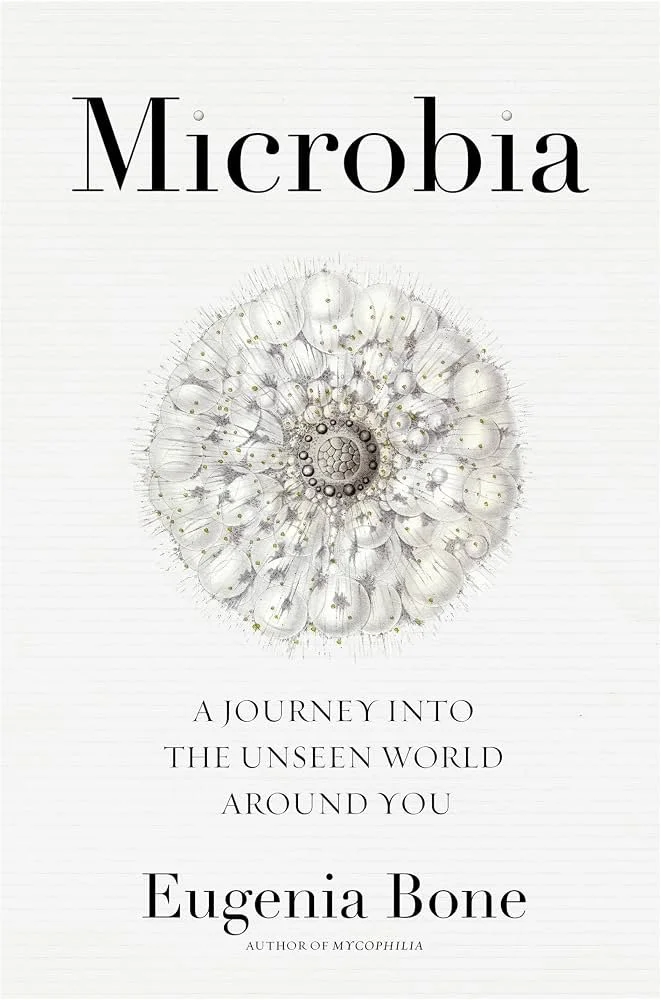
The spirited Eugenia Bone joins the podcast for a delightful exploration of the invisible life in nature. Picking up the thread of her 2018 book, Microbia, Eugenia paints us a series of astonishing portraits that illuminate the micro worlds of bacteria and fungi.
Detailed in the show are a learner’s inspriation about magical layers of nature our eyes can not detect.
Key areas discussed
Bacteria as the bridge between worlds — archaea and bacteria "bridge the abiotic and biotic," turning hydrogen, metals, and oxygen into life. The original alchemy.
The first food makers — the bottom of every food chain, and the reason there's a chain at all.
Endosymbiosis and Lynn Margulis — an archaeon engulfed a bacterium and didn't consume it. That merger became every complex living thing. Our mitochondria are the descendants; if one escapes into your bloodstream, your immune system attacks it as an alien.
"We're kind of like lichen" — cooperation as an architecture, not a sentiment. Plants did the same thing with chloroplasts.
Biofilms — colonies as a survival response to stress, signaling across the mat. The mouth as a nightly case study: anaerobes proliferating in the dark, receding at first light.
Against moralizing — "good bacteria" is "kind of bullshit." It's ratios, not virtue.
The wolves of Yellowstone — the elk, the stream banks, the beavers, the ducks, the fish. Pull one thread and the whole weave moves.
"You are the environment, but you create the weather" — diet, stress, and how you live as the climate your inner ecology has to survive.
Evolution isn't going anywhere — no direction, no perfection. Just whoever survives today hands their genes to tomorrow.
Antibiotic resistance in eleven days — the Harvard tray experiment, watching evolution happen at human timescale.
The gut as a hotel — permanent residents, temporary workers, and squatters.
Microbiomes are local — the Japanese seaweed-digesting microbe, the Inuit getting fermentation bacteria from milk and meat. You can't diet your way into someone else's food-scape.
Mycology as gateway — half-macro, half-microscopic; how she learned to imagine the unseen world, then went back to school in her fifties to earn it.
Three fungal lifestyles — rotters, parasites, mutualists. Or, as she reframes it, economic lifestyles: how do you get your food? What's the deal?
Fungi inside every leaf — endophytes providing immune services; plants outsourcing defense the way archaea outsourced energy.
The full cycle — fungi help plants grow, help them survive the day, kill them, rot them, and feed the next generation.
Psychedelics as access — a way of feeling what she already knows: that life is happening outside our senses.
Her current work — the Substack, Have a Good Trip, reporting without advocacy, "I'm never gonna tell my reader what to do."
Show notes
If social cohesion has a floor, this is it. Eugenia Bone — nature and food writer, author of Microbia and Have a Good Trip — joins Jef to open up the invisible world that made every other world possible. Long before there were families, tribes, or nations, there were bacteria and archaea doing something genuinely miraculous: bridging the abiotic and biotic, turning hydrogen and metals and oxygen into living tissue. "They make life out of unliving stuff," Eugenia says. They were the first food makers, the bottom line of every food chain since. And the leap from single cells to everything else wasn't a conquest — it was a merger. One cell engulfed another and didn't eat it. That restraint became us. Our mitochondria are the descendants of that ancient guest, still doing their job, still so foreign that if one slips loose in your bloodstream, your own immune system attacks it.
From there the conversation becomes a masterclass in ecological thinking. Eugenia has no patience for moralizing about nature: "good bacteria in your gut" is, in her words, kind of bullshit. What matters is population dynamics — ratios, not virtue. She tells the story of the wolves of Yellowstone, how removing one animal unspooled the elk, the stream banks, the beavers, the ducks, and the fish, and how putting the wolves back rewove the whole thing. The same logic runs through your body. "You are the environment, but you create the weather" — what you eat, how you live, what stress you're carrying becomes the climate your inner ecology has to survive. Along the way: biofilms as collective survival strategy, the nightly bloom and morning retreat of bacteria in your mouth, antibiotic resistance evolving on a lab tray in eleven days, and her enduring metaphor of the gut as a hotel full of permanent residents, temporary workers, and opportunistic squatters. Evolution, she reminds us, isn't heading toward anything. Your nose didn't develop to hold your glasses. The critters who survive the day are simply the ones whose genes make it to tomorrow.
The back half turns toward fungi, which Eugenia calls a great gateway drug to microbiology — half visible, half hidden, the perfect training ground for imagining what you can't see. Every plant you can see from where you're sitting has fungi living between its cells. Trees outsource nutrient foraging to mycorrhizal partners the way our ancient cells outsourced energy production, and the full fungal cycle is unsentimental: they help plants grow, help them survive the day, kill them, rot them, and return the pieces to the soil that feeds the next round. She offers three fungal lifestyles — rotters, parasites, mutualists — and suggests we might as well call them economic ones: how do you get your food, and what's the deal? What emerges by the end is less a science lesson than a way of walking around. Eugenia describes living in "a shroud of mystery," wrapped in the constant awareness that the invisible world of life is happening all around her. Her son once told her it makes less sense that God is one giant thing than that God is billions and billions of tiny things. It's a good place to leave it.
About Eugenia Bone:
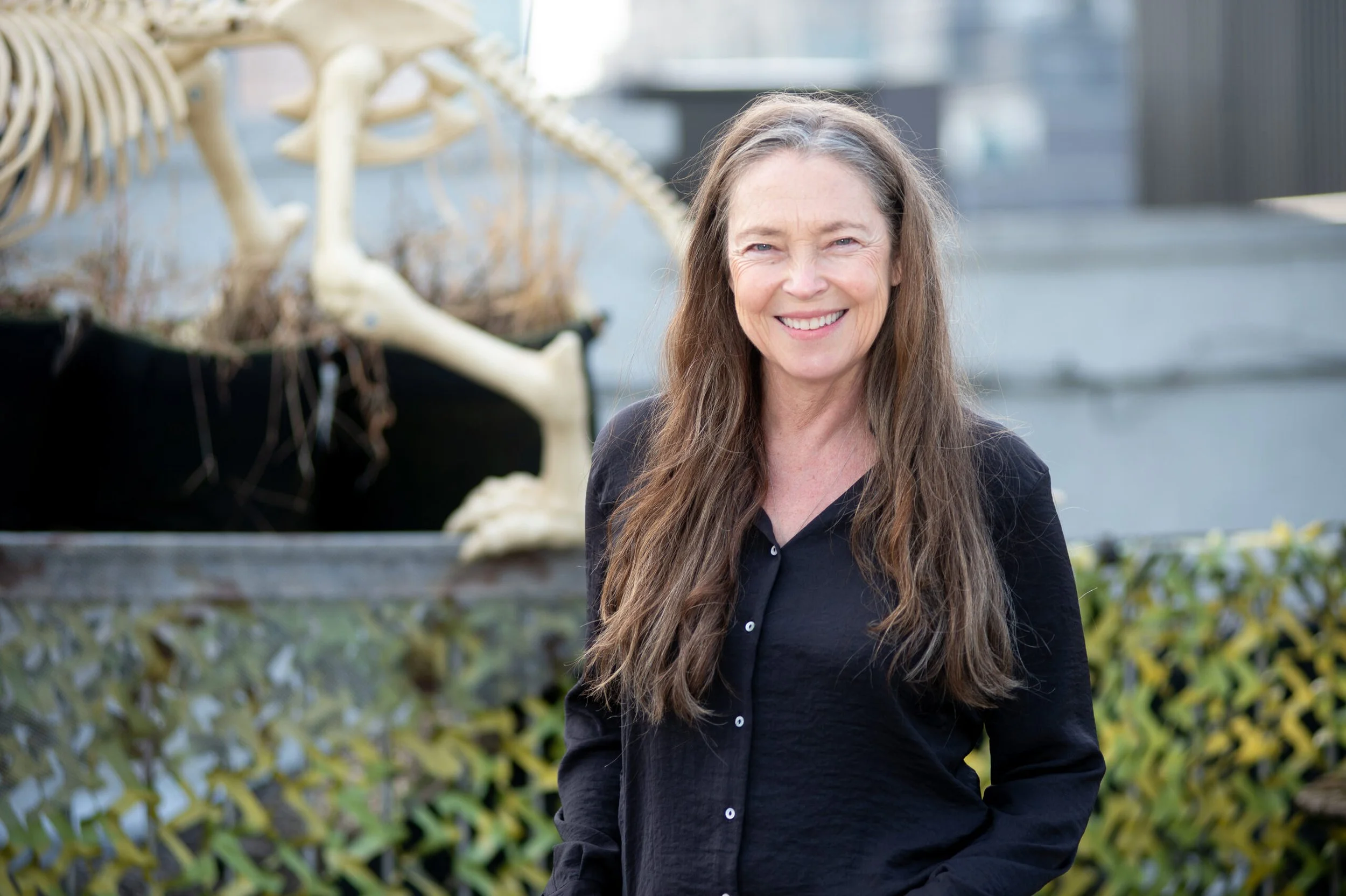
Eugenia is an internationally known food and nature writer whose work has appeared in many anthologies, magazines, and newspapers. She is a member of the faculty at the New York Botanical Garden where she teaches classes on mycophagy and psychedelic mushrooms. She is the author or co-author of nine books on food and biology, including the category staple Mycophilia, and most recently, Have a Good Trip: Exploring the Magic Mushroom Experience (October, 2024). She has been nominated for or won a variety of awards, including a James Beard Award. Eugenia is featured in the documentary directed by Louie Schwartzberg, Fantastic Fungi (2019), and in the Netflix children’s show about food, Waffles + Mochi (the mushroom episode) produced by Michele Obama’s Higher Ground Productions.
You can learn more about Eugenia at EugeniaBone.com
Subscribe to Eugenia’s Substack: eugeniabone.substack.com
Follow Eugenia on Instagram: Instagram.com/eugeniabone/